
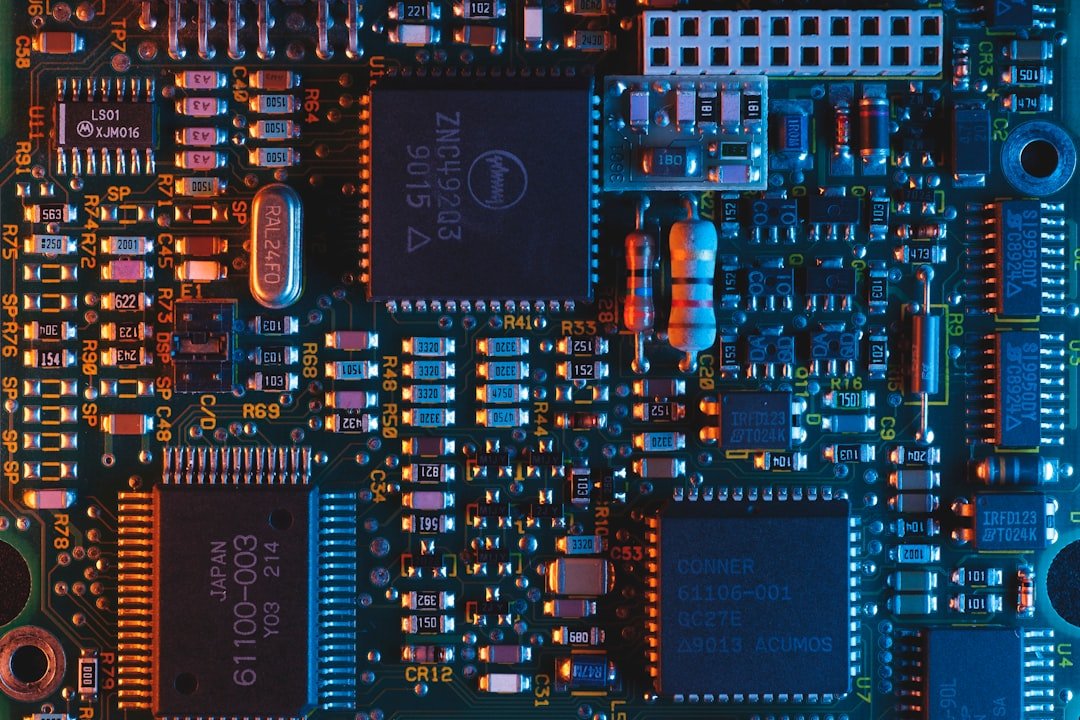
The OpenAI Jalapeño chip marks the company’s boldest move yet to own its destiny in artificial intelligence hardware.
Background on the OpenAI Jalapeño Chip
OpenAI has long operated at a structural disadvantage against rivals like Google and Amazon. Those companies run their own custom silicon — Google’s Tensor Processing Units and Amazon’s Trainium lines — to serve massive workloads at far lower margins. OpenAI, by contrast, spent approximately $14 billion serving ChatGPT on third-party GPUs in 2025 alone. That dependence on Nvidia hardware drained profits and limited how aggressively OpenAI could cut prices for users. The company spent years quietly building a hardware team to solve this problem. In October 2025, OpenAI formally announced a partnership with Broadcom to co-develop a custom chip. On June 24, 2026, the two companies delivered on that promise.
Key Details of the OpenAI Jalapeño Chip
OpenAI and Broadcom officially unveiled Jalapeño, OpenAI’s first custom-built AI inference processor, designed specifically around the company’s vision for large language model inference. Engineers at OpenAI built the chip from scratch. They optimized the architecture around kernels, memory movement, networking, and serving patterns unique to frontier AI models. OpenAI’s own AI models assisted in accelerating the chip’s development. Broadcom CEO Hock Tan physically delivered engineering samples to OpenAI CEO Sam Altman and President Greg Brockman in San Francisco. Early lab testing shows Jalapeño delivers performance-per-watt substantially better than current state-of-the-art alternatives. Engineering samples already run production-target workloads, including GPT-5.3-Codex-Spark, at full frequency and power. The chip targets initial deployment by the end of 2026, with production ramping in 2027 and full scale reached in the first half of 2028. OpenAI and Broadcom committed to deploying these accelerators at ten-gigawatt scale alongside Microsoft and other partners through 2029.
Industry Impact of the OpenAI Jalapeño Chip
Furthermore, this announcement reshapes the entire AI silicon competitive landscape. Before Jalapeño, OpenAI stood as the last major frontier AI lab without its own inference hardware. Now OpenAI joins Google, Amazon, and Meta — all of which run proprietary chips to slash serving costs. Broadcom scores enormous validation from the deal. The chipmaker’s AI chip revenue hit $8.4 billion in Q1 of fiscal 2026, up 106% year-over-year. CEO Hock Tan has set a target of over $100 billion in AI semiconductor sales by 2027. Meanwhile, questions swirl around Nvidia’s long-term dominance. Nvidia invested $30 billion directly into OpenAI as recently as February 2026. Sources close to the companies confirm Nvidia will remain central to OpenAI’s model training operations. Still, Jalapeño directly targets inference — the workload that generates the most daily cost at ChatGPT scale. A 50% reduction in inference costs at $14 billion annual spend represents a profitability-defining lever, not a marginal engineering win. Investors pay close attention: OpenAI filed a confidential S-1 with the SEC on June 8, 2026, targeting a potential IPO as early as September. Jalapeño gives Wall Street a concrete cost-reduction story ahead of that listing.
What Comes Next for the OpenAI Jalapeño Chip
Additionally, Broadcom CEO Hock Tan told CNBC that small prototype data center deployment begins in late 2026. The production ramp accelerates sharply through 2027. By the first half of 2028, OpenAI and Broadcom plan to operate Jalapeño at full scale. OpenAI simultaneously maintains its existing agreements with Nvidia, AMD, AWS Trainium, and Cerebras — sources confirm those vendor deals remain unaltered. The company describes Jalapeño as the first step in a multi-generation compute platform. Future chips will build on Jalapeño’s architecture and deepen the Broadcom partnership. OpenAI also frames the move as a full-stack ambition, stating it now designs chip architecture, kernels, memory systems, networking, and deployment systems — not just models and products. A detailed technical performance report arrives in the coming months.
Conclusion
Ultimately, the OpenAI Jalapeño chip signals a turning point for one of the world’s most watched companies. OpenAI no longer depends entirely on outside hardware vendors to run its products. It now designs the silicon, builds the software, and ships the services — a vertically integrated strategy that rivals Google and Amazon deployed years ago. For users, cheaper inference means faster ChatGPT responses and lower-cost API access. For investors eyeing the IPO, it means a credible path toward profitability. And for Nvidia, it means its largest AI customer now runs a hardware program of its own.
Related: OpenAI Jalapeño Chip Targets 50% Cheaper AI Inference
Originally reported by TechCrunch. Analysis by the FastCustomAI Editorial Team.