
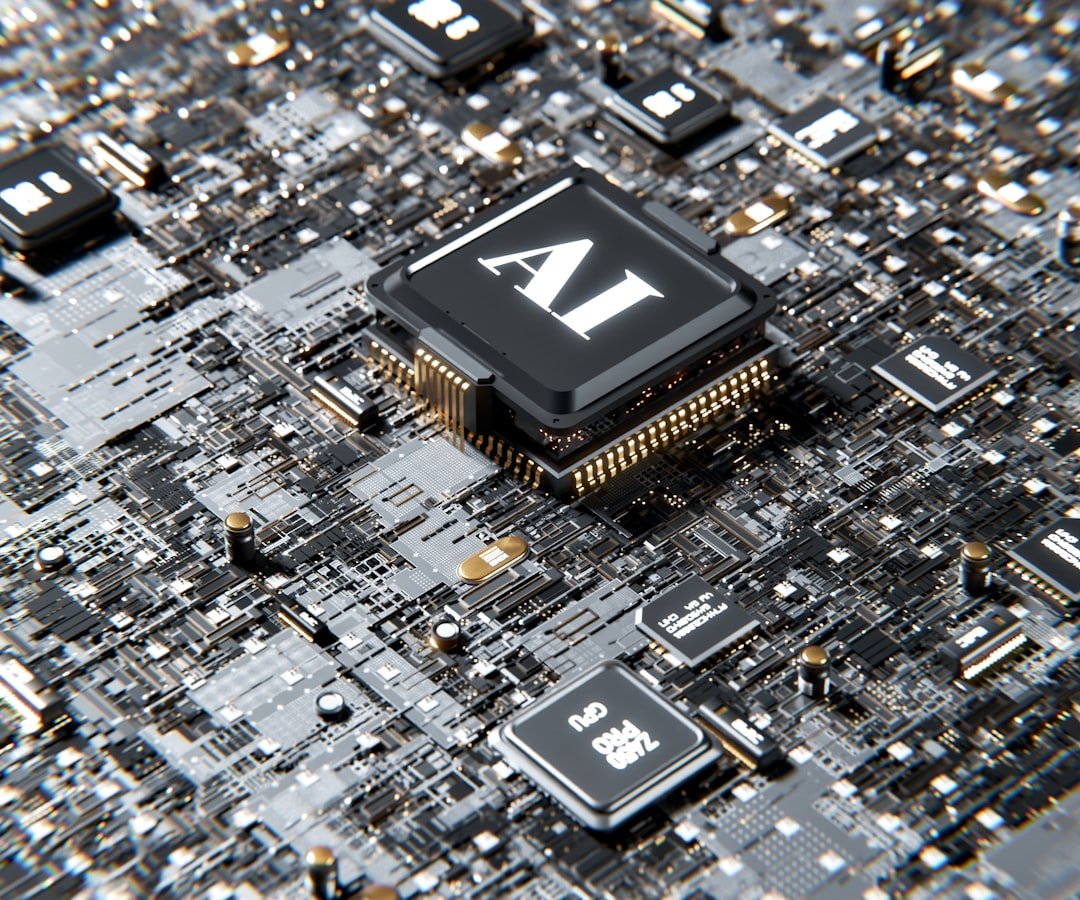
The OpenAI Jalapeño chip marks the most consequential moment in AI hardware since Nvidia’s H100 GPU conquered the training market. On June 24, 2026, OpenAI and Broadcom jointly unveiled Jalapeño — OpenAI’s first-ever custom-designed AI processor — built exclusively to slash the cost of running large language models at scale. The announcement sent immediate shockwaves across Silicon Valley, Wall Street, and Nvidia’s boardroom alike.
Background on OpenAI Jalapeño Chip
For years, OpenAI burned billions renting compute power from Nvidia, Microsoft Azure, and Amazon Web Services. The financial pressure was severe. OpenAI spent approximately $14 billion serving ChatGPT in 2025 on third-party GPUs alone. Those unsustainable economics pushed OpenAI’s leadership to pursue a radical solution: build the silicon themselves. Eight months after announcing the Broadcom partnership, OpenAI delivered its answer in the form of Jalapeño.
Key Details of the OpenAI Jalapeño Chip
Jalapeño is a purpose-built inference ASIC — not a repurposed training chip, and not a general-purpose processor. OpenAI designed it from scratch specifically for the unique demands of LLM inference workloads. The chip went from initial concept to manufacturing tape-out in just nine months — a timeframe OpenAI calls the fastest ASIC development cycle ever recorded in high-performance advanced semiconductors. Broadcom’s CEO Hock Tan physically handed engineering samples to OpenAI CEO Sam Altman and President Greg Brockman at OpenAI’s San Francisco headquarters.
Furthermore, early lab testing shows Jalapeño delivers performance per watt that is substantially better than today’s leading-edge hardware. Self-reported figures claim roughly 50% lower inference costs per token versus current Nvidia GPUs, though independent benchmarks have not yet confirmed these numbers. Engineering samples already run real ML workloads in the lab, including the GPT-5.3-Codex-Spark model. OpenAI and Broadcom commit to deploying the chip at 10-gigawatt scale through 2029, with Microsoft reportedly securing 40% of initial chip output.
Industry Impact of the OpenAI Jalapeño Chip
Nvidia has dominated the AI chip market for years, but this announcement signals the era of total Nvidia dependence may be ending. OpenAI now joins Google, Apple, Meta, and Amazon as major technology players who design their own silicon to escape single-supplier risk. For Nvidia, the real threat is not one lost benchmark — it is that its most important customers now pull inference workloads onto proprietary chips. Inference currently represents the fastest-growing compute segment in all of AI, and that pressure compounds over time.
Additionally, Broadcom shares reflect the momentum this partnership generates. The company recorded an 18% year-over-year increase in early 2026 and a nearly 7x boost since the end of 2022. Broadcom now sits as the kingmaker of custom AI silicon, sitting behind chip designs for Google TPUs, OpenAI Jalapeño, Meta MTIA accelerators, and reportedly Anthropic and Apple as well. The custom silicon arms race accelerates with every new lab that exits the Nvidia-only lane.
What Comes Next
Still, analysts urge measured expectations. Broadcom CEO Tan confirmed small prototype data center deployment by late 2026, with production ramp scaling through 2027 and reaching full scale in early 2028. Most ChatGPT users will not feel Jalapeño’s impact for at least another year. OpenAI also makes clear that pre-training workloads — the most compute-intensive phase — will still rely on Nvidia hardware for the foreseeable future. A detailed technical performance report will follow in the coming months, which independent researchers will scrutinize heavily.
Moreover, this hardware push carries enormous strategic weight ahead of OpenAI’s anticipated IPO. OpenAI confidentially filed its own IPO prospectus in early June 2026, targeting a potential public debut as soon as September. Jalapeño gives private investors and public markets a concrete roadmap toward profitability. If inference costs fall meaningfully at scale, OpenAI can lower API pricing, improve margins, and finally pivot from the spend-at-all-costs era that defined its first decade.
Conclusion
Ultimately, the OpenAI Jalapeño chip represents far more than a hardware announcement. It signals OpenAI’s transformation from a pure software laboratory into a full-stack technology company — one that controls models, products, and now the silicon those products run on. The AI infrastructure war now plays out at every level, from model weights to chip architectures to gigawatt-scale data centers. OpenAI just entered the hardware arena. The entire industry will adjust accordingly.
Related: Anthropic IPO Filing Targets $1T Nasdaq Debut
Originally reported by TechCrunch. Analysis by the FastCustomAI Editorial Team.