
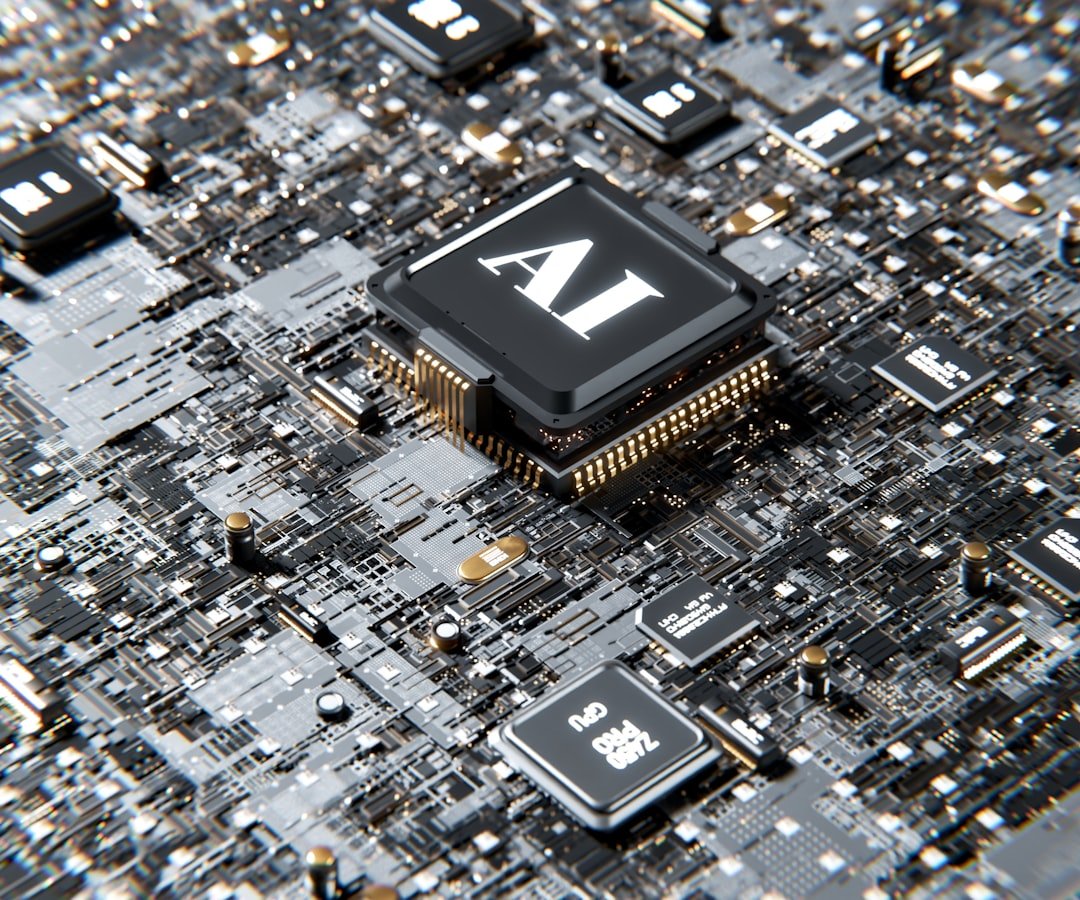
The OpenAI Jalapeño chip marks the most consequential hardware move in AI history, reshaping how the world’s most powerful AI lab plans to survive — and profit. On June 24, 2026, OpenAI and Broadcom officially unveiled Jalapeño, OpenAI’s first custom-designed AI inference processor, built from scratch to slash the runaway cost of serving its frontier models to hundreds of millions of users.
Background on the OpenAI Jalapeño Chip
For years, OpenAI relied almost entirely on Nvidia’s premium GPUs to power ChatGPT. That dependence came with a brutal price tag. OpenAI spent approximately $14 billion serving ChatGPT in 2025 on third-party hardware, burning roughly $1.35 for every dollar it earned. The company needed a smarter path to unit economics — and that path runs through custom silicon. OpenAI and Broadcom first announced their collaboration in October 2025, committing to a ten-gigawatt deployment of custom accelerators alongside Microsoft and other partners.
Key Details of the OpenAI Jalapeño Chip
OpenAI and Broadcom completed the Jalapeño design in just nine months — from initial design to manufacturing tape-out. That speed represents what the companies call the fastest ASIC development cycle ever achieved in high-performance semiconductors. Broadcom CEO Hock Tan physically delivered engineering samples to OpenAI CEO Sam Altman and President Greg Brockman at OpenAI’s San Francisco headquarters. The chip is a purpose-built inference ASIC — not a repurposed training accelerator — designed to run LLMs close to their theoretical hardware limits. Early testing shows Jalapeño delivers performance per watt substantially better than current state-of-the-art hardware. The architecture reduces costly data movement and balances compute, memory, and networking resources. OpenAI’s hardware lead Richard Ho confirmed the chip targets the kernels, memory movement, and serving patterns that matter most for frontier models. Engineering samples already run GPT-5.3-Codex-Spark workloads at production target frequency and power in the lab.
Industry Impact of the OpenAI Jalapeño Chip
Strategically, this announcement signals OpenAI’s pivot from pure software lab to full-stack infrastructure company. OpenAI now designs chip architecture, kernels, memory systems, networking, and deployment systems — not just models and products. A 50% inference cost reduction at the scale OpenAI operates is a profitability-defining lever, not a marginal engineering win. Meanwhile, the move puts pressure directly on Nvidia, OpenAI’s largest GPU supplier. Broadcom shares reflected investor enthusiasm, rising roughly 10% so far in 2026 and nearly sevenfold since 2022. The partnership also cements Broadcom’s position as the kingmaker of custom AI silicon, already building chips for Google, Meta, Apple, and reportedly Anthropic. Broadcom plans to enable gigawatt-scale data center deployment with Microsoft and other partners beginning in 2026 — data centers that consume energy on the order of entire cities.
What Comes Next
Broadcom targets small prototype data center deployment by end of 2026, with a full production ramp in 2027 and wide-scale rollout in the first half of 2028. OpenAI promises a detailed technical performance report in the coming months. Critically, Jalapeño also carries enormous weight for OpenAI’s looming IPO. OpenAI confidentially filed its S-1 prospectus with the SEC on May 22, 2026, working with Goldman Sachs and Morgan Stanley toward a potential listing as early as September 2026. Analysts expect the debut to push OpenAI’s market cap past $1 trillion. Investors need to see a credible path to profitability — and Jalapeño hands them exactly that narrative. Additionally, with Anthropic filing its own confidential S-1 on June 1, 2026, at a $965 billion valuation, both companies now race toward the most closely watched dual AI IPO in market history. ChatGPT already serves more than 900 million weekly active users, and Jalapeño aims to keep that growth financially sustainable.
Conclusion
Ultimately, the OpenAI Jalapeño chip rewrites OpenAI’s story — from a money-losing AI model provider into a vertically integrated AI infrastructure giant. By controlling its own silicon, OpenAI attacks its single biggest cost driver with surgical precision. The chip arrives at a pivotal moment, just as OpenAI prepares to meet public market scrutiny for the first time. If Jalapeño delivers on its promise, it hands Sam Altman the most powerful slide in any IPO roadshow: proof that the economics of AI can actually work.
Related: OpenAI Jalapeño Chip Targets 50% Cheaper AI Inference
Originally reported by TechCrunch. Analysis by the FastCustomAI Editorial Team.