
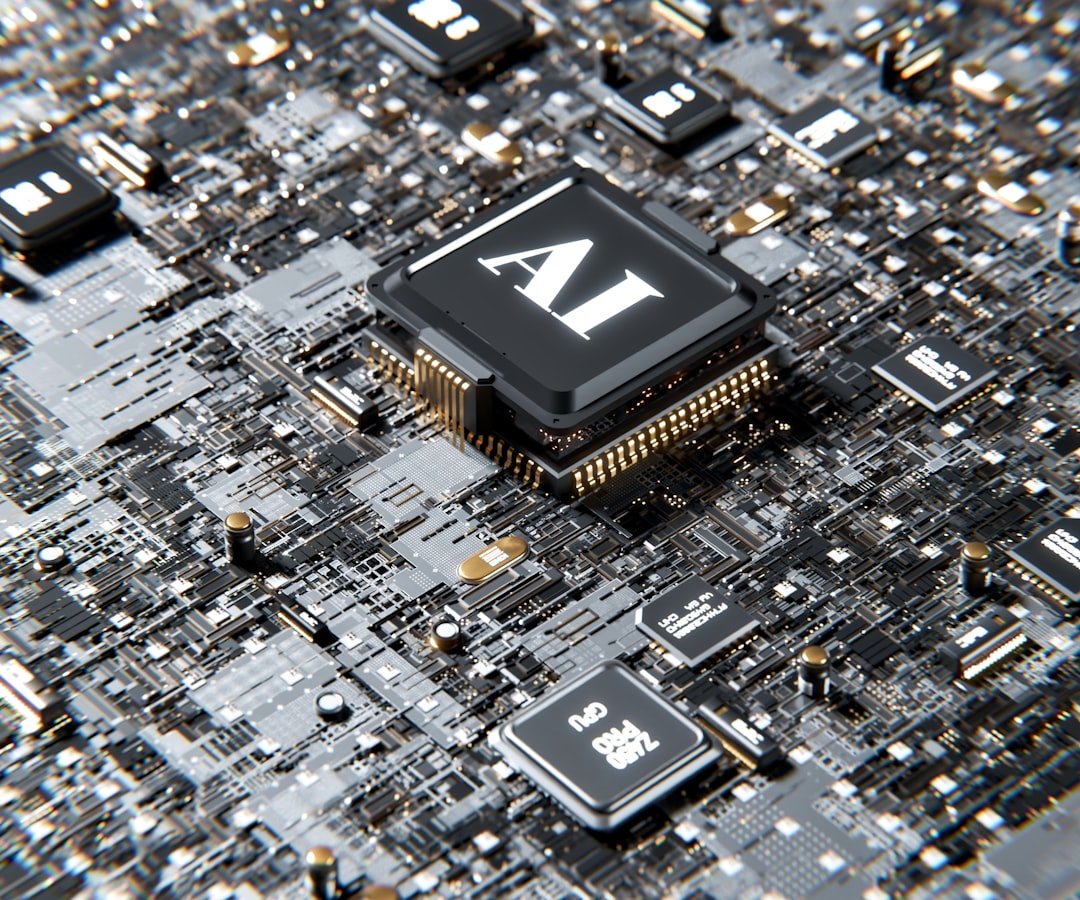
The OpenAI Jalapeño inference chip marks the boldest hardware move any pure-play AI lab has ever made. OpenAI and Broadcom unveiled the processor on June 24, 2026, fundamentally changing how the company controls its own destiny. The chip targets inference — the process of serving live AI responses to users — and early tests show it outperforms current leading accelerators on performance per watt. This is not a side project. It is a strategic pivot that reshapes the entire AI infrastructure conversation.
Background on OpenAI Jalapeño Inference Chip
For years, OpenAI depended almost entirely on Nvidia GPUs to run ChatGPT and its API products. That dependence cost billions and squeezed margins. Google built Tensor Processing Units. Amazon built Trainium. Microsoft launched the Azure Maia 100 accelerator. OpenAI watched all three rivals pull ahead on infrastructure economics. The Broadcom partnership, first announced in October 2025, gave OpenAI its first real path out. Engineers then designed the Jalapeño chip from scratch in just nine months, using OpenAI’s own models to accelerate the development cycle.
Key Details of the OpenAI Jalapeño Inference Chip
Jalapeño is a purpose-built inference ASIC, not a repurposed training accelerator. OpenAI designed it around the specific memory movement, networking, and compute patterns that large language models demand at scale. Engineering samples now run GPT-5.3-Codex-Spark workloads at production target frequency and power in the lab. The architecture reduces data movement and balances compute, memory, and networking resources to hit utilization closer to theoretical peak performance. Broadcom handles silicon implementation and Tomahawk networking. Celestica manages board, rack, and system integration. Initial deployment targets the end of 2026, with Microsoft named as the first major data center partner.
Industry Impact
The Jalapeño chip lands as OpenAI prepares for a heavily anticipated public offering. Analysts at VentureBeat note the chip gives investors evidence that OpenAI can improve its unit economics and move toward profitability. OpenAI currently burns over $150 million per day, and inference costs drive a significant portion of that figure. Rival Anthropic has already overtaken OpenAI in annualized revenue, hitting a $47 billion run rate in May 2026. Anthropic separately entered discussions with Samsung about its own custom chip. The custom silicon race now spans every major AI lab, and Nvidia faces its first serious structural threat from its own biggest customers.
What Comes Next
Broadcom CEO Hock Tan confirmed the rollout follows a multi-generation roadmap, with full-scale production ramping in 2027 and hitting top capacity in early 2028. OpenAI plans to deploy Jalapeño inside gigawatt-scale data centers alongside Microsoft and other infrastructure partners. The company will publish a detailed technical performance report in the coming months. Meanwhile, OpenAI also holds agreements with AMD for Instinct MI450 GPUs and with Cerebras for high-throughput inference. Jalapeño does not replace those deals immediately — it supplements them and gives OpenAI a long-term hedge against single-supplier risk.
Conclusion
OpenAI spent four years as a software company that rented its hardware. The OpenAI Jalapeño inference chip closes that chapter. By owning a purpose-built accelerator, OpenAI gains control over cost, speed, and reliability at the infrastructure layer. Every ChatGPT response, every Codex task, and every API call becomes cheaper to serve as the chip scales. The move also sends a clear signal ahead of the IPO: OpenAI builds full-stack AI, not just models. That story will matter enormously to public market investors when the S-1 lands.
Related: OpenAI GPT-5.6 Launch Blocked by US Government
Originally reported by TechCrunch. Analysis by the FastCustomAI Editorial Team.