
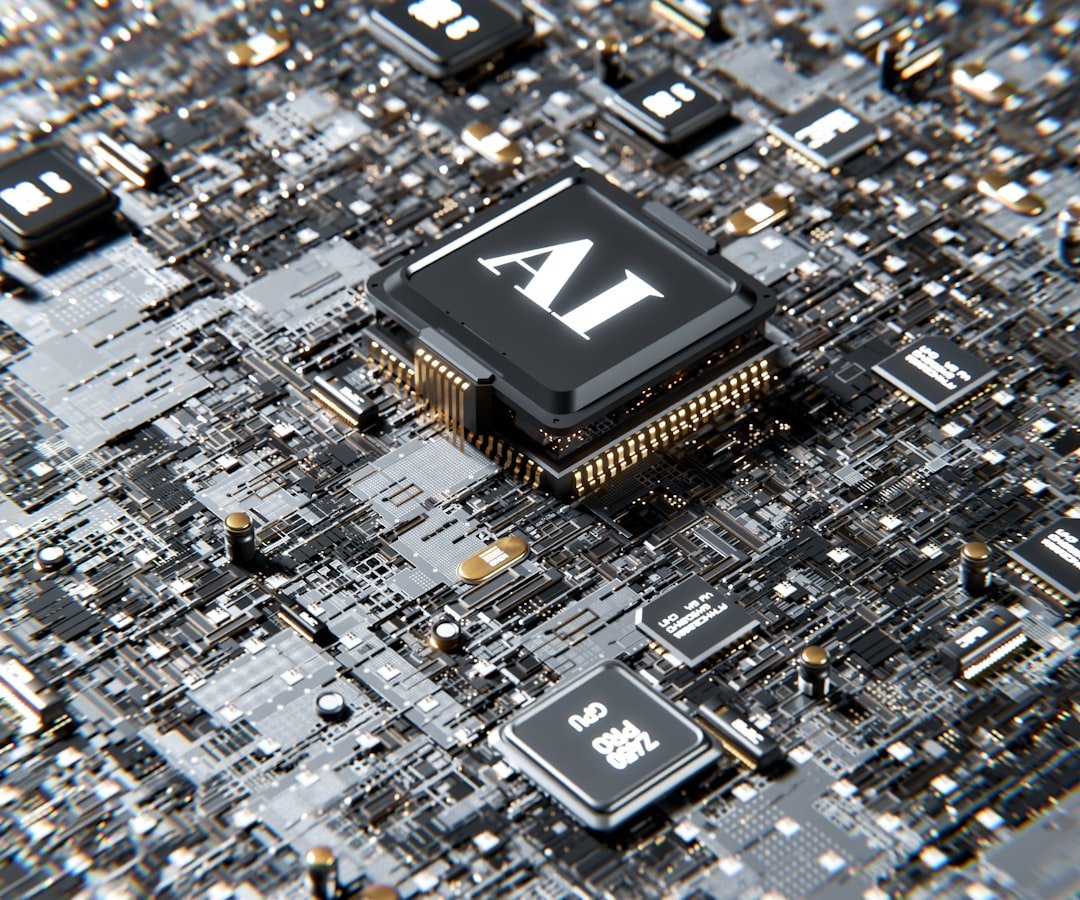
The OpenAI Jalapeño chip marks the most consequential hardware move in the company’s history, arriving on June 24, 2026, as a custom-built inference processor designed to slash the cost of running large language models at scale. OpenAI and Broadcom jointly unveiled the chip at OpenAI’s San Francisco headquarters, where Broadcom CEO Hock Tan physically delivered engineering samples to OpenAI CEO Sam Altman and President Greg Brockman. The announcement signals a fundamental shift: OpenAI no longer wants to simply buy compute — it wants to own it.
Background on OpenAI Jalapeño Chip
Since ChatGPT launched in late 2022, OpenAI has relied almost entirely on Nvidia’s GPUs to run its models. That dependency grew brutally expensive fast. OpenAI spent approximately $14 billion serving ChatGPT on third-party GPUs in 2025 alone. The company reportedly spent $1.35 for every dollar it earned that year. Those economics made building a proprietary chip not just attractive — they made it existential. OpenAI had long discussed custom silicon ambitions, but the Jalapeño reveal turns that ambition into real hardware.
Key Details of the OpenAI Jalapeño Chip
OpenAI and Broadcom co-developed Jalapeño from initial design to manufacturing tape-out in just nine months. The companies describe that pace as potentially the fastest ASIC development cycle ever achieved in high-performance advanced semiconductors. The chip is a purpose-built inference ASIC — not a repurposed training accelerator. Its architecture directly targets the bottlenecks that drain efficiency during LLM inference: costly data movement, memory-compute imbalance, and networking overhead. Early testing shows Jalapeño delivers performance per watt substantially better than current state-of-the-art hardware.
Furthermore, OpenAI used its own models to accelerate parts of the chip’s design and optimization process. That recursive loop — models helping build the hardware that runs future models — represents a genuinely novel engineering approach. OpenAI hardware program lead Richard Ho confirmed the chip runs its most important workloads close to the hardware’s theoretical limits. Deployment of initial prototype data centers targets the end of 2026, with full production scale planned for the first half of 2028.
Industry Impact of the OpenAI Jalapeño Chip
The Jalapeño announcement immediately reshapes the competitive dynamics of the AI silicon market. Broadcom cements its role as the kingmaker of custom AI chips, already sitting behind Google’s TPUs, Meta’s MTIA accelerators, and now OpenAI’s first-generation inference platform. Microsoft confirmed its position as a primary deployment partner. Reports indicate Broadcom required Microsoft to guarantee 40 percent of the first production run — a commitment that underscores the staggering scale of capital behind the chip.
Additionally, the move puts direct pressure on Nvidia. Jalapeño targets inference, the segment where Nvidia currently earns enormous margins. While OpenAI will still lean on Nvidia for training workloads, even small efficiency gains at inference scale translate into billions of dollars in savings annually. Wall Street noticed: Broadcom shares climbed roughly 10 percent year-to-date in 2026 and have multiplied nearly sevenfold since the end of 2022. The market reads the OpenAI partnership as a major strategic validation.
Meanwhile, the move accelerates a broader industry trend. Google builds its own TPUs. Amazon runs Trainium and Inferentia. Meta designs MTIA accelerators. Now OpenAI joins that club. Every frontier lab building custom silicon reduces its dependence on Nvidia — and collectively, that shift reshapes the global chip supply chain.
What Comes Next
OpenAI plans gigawatt-scale data center deployments alongside Microsoft and other partners beginning later in 2026. Those facilities will draw power on the order of entire cities. The multi-generation roadmap means Jalapeño is only the first chip in a longer hardware family OpenAI and Broadcom commit to building together. OpenAI will publish a detailed technical performance report in the coming months. Investors and analysts will watch those benchmarks closely, especially as OpenAI prepares a confidential IPO filing targeting a public debut as early as September 2026. A credible path to lower inference costs strengthens OpenAI’s profitability story ahead of that offering significantly.
Beyond OpenAI, the nine-month development timeline sets a new benchmark for ASIC speed. Rivals now face pressure to match that pace or risk falling behind on infrastructure economics. ByteDance entered active chip negotiations with Qualcomm in June 2026 for similar reasons. Custom silicon has officially become a competitive necessity — not a luxury — for any lab that wants to run frontier models profitably at scale.
Conclusion
The OpenAI Jalapeño chip represents a pivotal inflection point for the entire AI industry. OpenAI moves from pure software lab to full-stack infrastructure company in a single announcement. A 50 percent reduction in inference costs at ChatGPT’s scale is not a marginal engineering improvement — it is a profitability-defining event. Every developer, enterprise customer, and competitor in the AI space now watches Jalapeño’s deployment with intense focus. The chip race just got a powerful new entrant.
Related: OpenAI and Anthropic IPO Race Shakes Markets
Originally reported by TechCrunch. Analysis by the FastCustomAI Editorial Team.